Love it or hate it, the era of roster volatility has arrived. Whether it’s Lindsey Scott Jr.’s odyssey across five football programs (LSU, East Mississippi Community College, Missouri, Nicholls State, and Incarnate Word) or Cam McCormick’s unprecedented (for now) nine-season college career, athlete movement is now woven into the fabric of college sports.
Last week, we examined conference leaders in advanced metrics and compared production between transfer and homegrown players. This week on Stats Corner, we aree taking a broader approach: analyzing the percentage of transfer versus homegrown players in rotation to determine whether roster composition correlates with NET rankings.
Methodology: Data includes all Mountain West teams; players averaging 15+ minutes per game are counted; freshmen are excluded from homegrown/transfer classification but noted separately; NET rankings are as of February 24th. Full data table provided at the end.
The Outsourced Roster: Four Programs Go All-In on Transfers
The most striking revelation? Four Mountain West programs have essentially outsourced their roster construction to the transfer portal. New Mexico (#44), Grand Canyon (#76), Wyoming (#98), and Fresno State (#134) are operating with 100% transfer-heavy rotations when excluding freshmen, zero homegrown players see significant minutes.
New Mexico perhaps best exemplifies this approach, and the results are compelling. The Lobos, sitting squarely on the NCAA Tournament bubble at NET #44 with a 21-6 record, derive every minute from transfer or freshman talent. Five different transfers—Luke Haupt (26.4 MPG), Antonio Chol (26.0), Deyton Albury (24.6), Chris Howell (24.5), and Tajavis Miller (17.2)—anchor the rotation. While freshman Jake Hall (29.5 MPG) and Tomislav Buljan (25.3) provide rookie talent, the Lobos’ success suggests transfers can indeed deliver immediate results when deployed strategically.
Grand Canyon, recently surging up the NET rankings, follows an identical blueprint. The Antelopes feature seven transfers logging significant minutes, led by Nana Owusu-Anane (32.3 MPG) and Jaden Henley (31.6 MPG), who lead the Mountain West for combined minutes among two teammates. With GCU climbing into the NET top 75, their portal-first approach is hard to argue with.
Wyoming and Fresno State represent the lower end of the transfer-heavy spectrum but share the same philosophy. Wyoming’s Khaden Bennett (28.3 MPG) and Leland Walker (28.2 MPG) lead a completely transfer-reliant rotation, while Fresno State leans heavily on Jake Heidbreder (36.8 MPG) and Zaon Collins (30.7 MPG).
The Counterpoint: Air Force’s Homegrown Experiment
At the opposite extreme sits Air Force (#350), an outlier by necessity rather than choice. The Academy’s recruitment restrictions, limited to cadets who meet military service obligations—render the transfer portal virtually inaccessible. The result: a 100% homegrown rotation anchored by Kam Sanders (29.5 MPG), Lucas Hobin (28.8 MPG), and Eli Robinson (27.9 MPG). While the Falcons’ freshman-heavy roster represents admirable program continuity, the on-court results are stark, they remain the only Mountain West team without a conference win. In an era of instant gratification through the portal, Air Force’s approach offers a cautionary tale about the limitations of purely internal roster construction.
The Hybrid Model: San Diego State Found Middle Ground
Perhaps the most instructive case study lies in San Diego State (#46). The Aztecs have discovered what may be the optimal balance: 75% homegrown players earning 74% of minutes, complemented effectively by key contributors from the transfer market.
Reese Dixon-Waters (29.2 MPG), a transfer, tops the rotation—but the Aztecs’ identity remains homegrown, with Miles Byrd (28.0 MPG), BJ Davis (22.1 MPG), and Elzie Harrington (20.4 MPG) providing the core. San Diego State, projected as a “First Four Out” team by ESPN’s Joe Lunardi, demonstrates that successful programs can incorporate transfers without abandoning program culture. They aren’t alone in this approach, but they execute it most effectively among Mountain West contenders.
The Transfer-Heavy Contenders
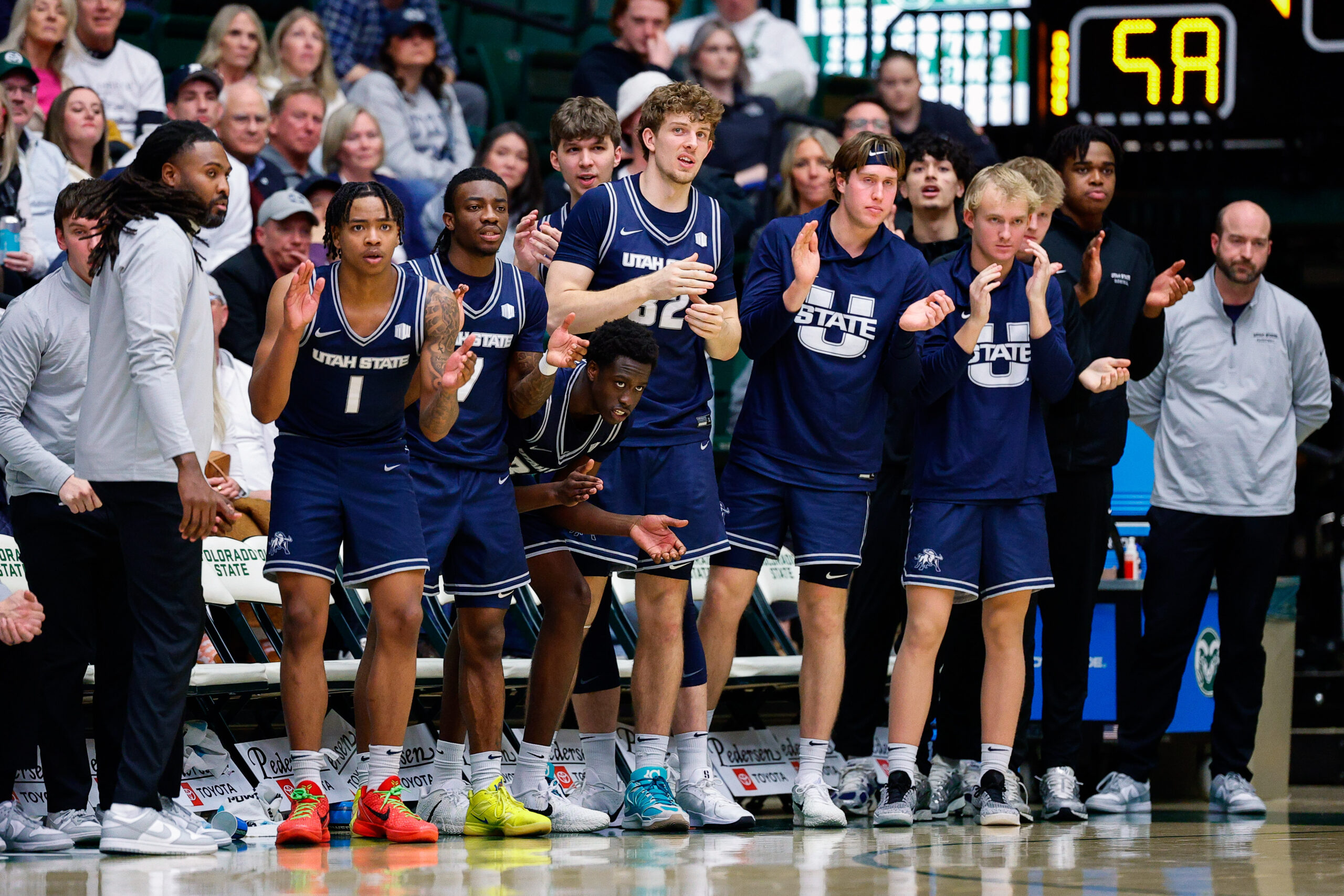
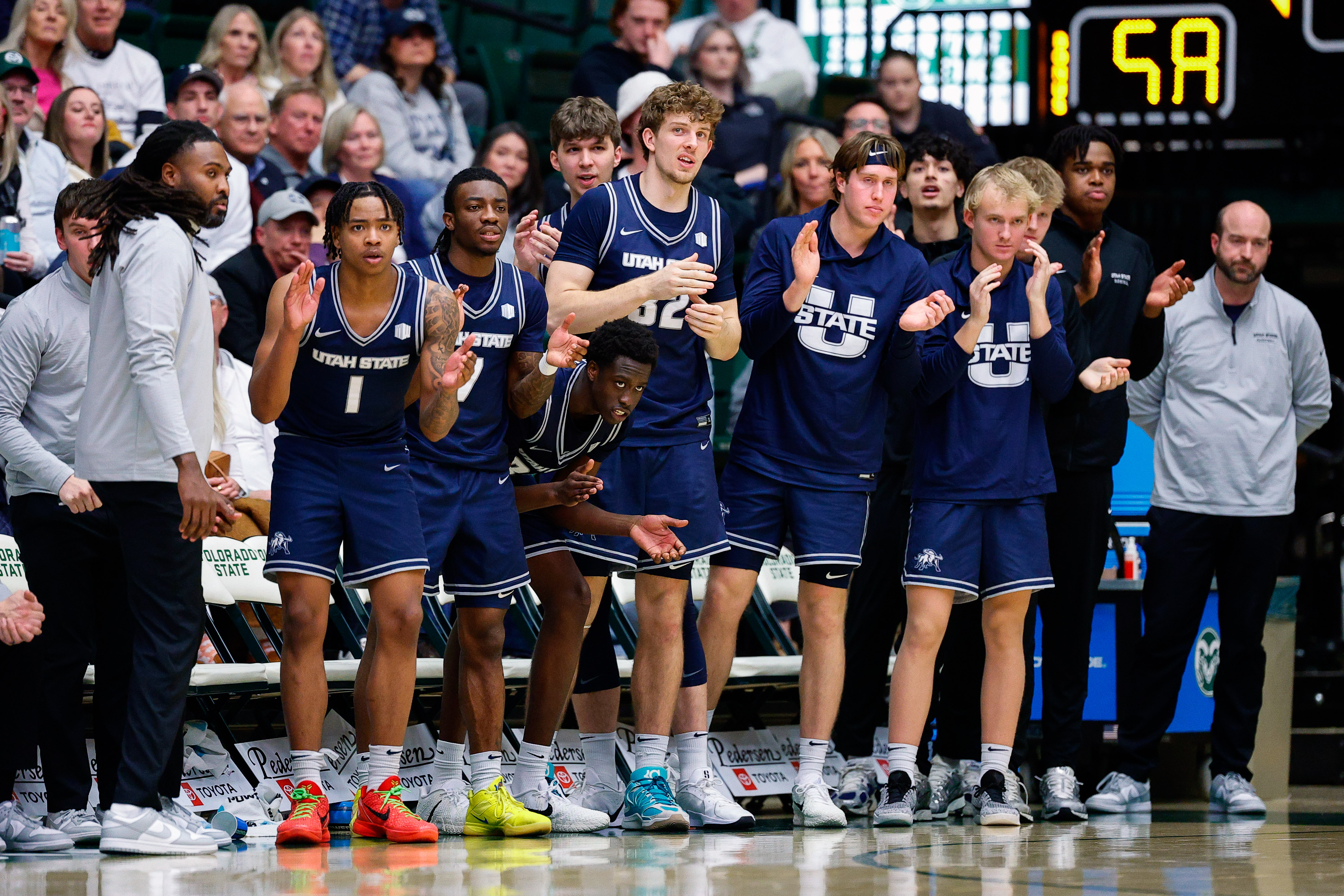
Utah State (#23) represents perhaps the most nuanced case. The Aggies, projected by Lunardi as a No. 7 seed in the NCAA Tournament and ranking 23rd in NET, rely heavily on transfers (66.7% of players, 64.5% of minutes). MJ Collins (30.2 MPG) and Drake Allen (24.0 MPG) lead the transfer contingent, while homegrown star Mason Falslev (31.4 MPG)—the frontrunner for Mountain West Player of the Year—anchors the team. Falslev’s conference-leading 4.7 Win Shares demonstrates that transfers and developed upperclassmen can coexist productively. Still, Utah State’s “homegrown” contributions are skewed toward freshmen Adlan Elamin (18.8 RPG) and Elijah Perryman (15.8 MPG), suggesting their internal development pipeline is just beginning to bear fruit, if they can keep them.
Nevada (#62) and UNLV (#127) have embraced the transfer portal more aggressively. Nevada allocates a staggering 90.6% of rotation minutes to transfers, led by Corey Camper Jr. (31.6 MPG), who has emerged as the Wolf Pack’s offensive engine after being projected as merely a role player in the preseason. Corey Camper Jr. and Elijah Price (31.1 MPG) form one of the Mountain West’s most productive duos, all via the portal. UNLV follows suit at 89% transfer minutes, with Dra Gibbs-Lawhorn (33.3 MPG) spearheading a completely overhauled roster.
Colorado State (#87), currently undefeated in February, and recently reaching .500 in conference play, taps into a measured transfer approach at 71.4%. Jevin Muniz (29.4 MPG) and Josh Pascarelli (27.7 MPG) head a transfer-heavy core, but Kyle Jorgensen (25.3 MPG) and Rashaan Mbemba (19.1 MPG) maintain some homegrown presence.
The Moderates: Boise State and San Jose State
Boise State (#60) represents the middle ground of the Mountain West. The Broncos split their rotation nearly evenly: 42.9% homegrown players receiving 42% of minutes. Andrew Meadow (29.6 MPG) leads a rotation featuring key contributions from Dylan Andrews (29.1 MPG, transfer) and Javan Buchanan (27.5 MPG, transfer). This measured approach to portal usage positions Boise State firmly in the at-large conversation.
San Jose State (#250) presents an intriguing case—ranked 250th in NET but maintaining an almost perfectly split rotation (42.9% homegrown players, 43.3% homegrown minutes). Colby Garland (34.5 MPG, transfer) and Jermaine Washington (33.8 MPG, homegrown) form a balanced 1-2 punch, suggesting the Spartans’ issues stem from something beyond roster construction philosophy.
The Freshman Factor
Freshmen complicate this analysis significantly. Programs like Utah State, New Mexico, Nevada, and UNLV are banking on first-year players who, while technically homegrown, represent a different roster-building philosophy: recruiting over developing. Utah State’s “homegrown” contributions are inflated by Elamin and Perryman—talented, yes, but not products of multi-year development. Similarly, New Mexico’s Jake Hall and Tomislav Buljan provide immediate freshman impact rather than the fruits of patient cultivation.
This raises a fascinating question: Is playing freshmen any different from playing transfers? Both represent immediate acquisitions rather than developed talent. The distinction might matter more for program culture than on-court production.
The Data Tells Three Stories
1. The Sweet Spot: Moderate Transfer Use = Success
The two Mountain West teams firmly in NCAA Tournament contention use transfers—but don’t abuse them.
TeamTransfer %Net RankingNCAA Tournament Outlook
Utah State 64.5% of minutes #23 Projected No. 7 seed
San Diego State 26% of minutes #46 Bubble – Last Two Out
Both teams feature star transfers (MJ Collins, Reese Dixon-Waters) but maintain homegrown leadership (Mason Falslev, Miles Byrd). The portal provides talent; the homegrown base provides identity and consistency.
Conclusion: Teams that combine transfers with developed players perform at the highest level.
2. The All-In Approach: High Risk, Mixed Results
Four Mountain West programs run 100% transfer-heavy rotations (excluding freshmen):
TeamTransfer %Net RankingOutlook
Grand Canyon 100% #76 Rising, but outside bubble
New Mexico 100% #44 First Four Out
Wyoming 100% #98 Unlikely NCAA bid
Fresno State 100% #134 Well outside bubble
The problem: There’s no floor. When transfers thrive, you’re on the bubble (New Mexico). When they don’t click, you’re watching from home (Fresno State). These teams have zero program continuity—they’re rebuilding every single season.
Conclusion: Going all-in on transfers creates volatility, not stability.
3. The Homegrown-Only Approach: Falling Behind
TeamTransfer %Net RankingOutlook
San Jose State 43.3 % homegrown minutes #250 Staying home
Air Force 0% #350 No conference wins
San Jose State, with close to 50-50 roster along with Air Force are the only MWC programs ranked 200 or below. Air Force’s 100% homegrown approach—forced by Academy restrictions—has resulted in the worst NET ranking in the conference.
Conclusion: Without transfer help, programs compete at a significant disadvantage in modern college basketball.
The Key Findings
Immediate impact players: Freshmen take time to develop. Transfers provide production now. Look at MJ Collins (Utah State, 30.2 MPG) or Corey Camper Jr. (Nevada, 31.6 MPG)—instant contributors who made their teams better overnight.
Patching roster holes: No program recruits perfectly every year. The portal allows teams to address specific needs—rebounding, shooting, playmaking—without waiting three years for a recruit to develop.
Roster flexibility: Utah State and San Diego State can target exactly what they need, then integrate transfers into an existing culture rather than building everything from scratch every season.
Competitive necessity: The top Mountain West programs use transfers heavily. Refusing to engage means falling behind—Air Force is proof.
How the Transfer Portal HURTS teams:
No program continuity: New Mexico, Wyoming, Grand Canyon, and Fresno State essentially hit “reset” every offseason. No team identity, no chemistry built over years, no leadership pipeline.
Chemistry is hit-or-miss: Transfers don’t always fit. When they gel (Utah State, New Mexico), you look brilliant. When they don’t (UNLV, ranked #127 despite 89% transfer minutes), you’re stuck with a roster that can’t play together and sometimes it takes time Colorado State is undefeated in February with 74.9% of minutes going to transfers, but is it too litle too late for a NCAA bid?
Short-term mindset: You’re not building for the future—you’re renting players for one or two seasons. What happens when they graduate? The cycle repeats.
Defensive struggles: Offensive talent transfers everywhere. Defensive systems take time to learn. Transfer-heavy teams often score well but struggle defensively—note that Utah State is the only MW team in the top 50 in both offensive and defensive efficiency.
The transfer portal helps teams when used as a tool, not a crutch.
Think of transfers like free agency in professional sports:
Great teams add key free agents to a strong core (Utah State, San Diego State)
Struggling teams load up on rentals hoping something sticks (Wyoming, Fresno State)
Traditional teams that cannot adapt get left behind (Air Force)
Does the Transfer Portal help teams? Yes, if you use it. No team in the Mountain West sits in the top 100 in NET without leaning significantly on transfers. But the teams that lean too heavily, abandoning program identity for portal talent, are subjecting themselves to extreme volatility.
The smartest teams don’t outsource their roster. They supplement it.
Data Appendix: Mountain West Rotation Breakdown
#23 Utah State: 33.0% Homegrown, 66.7% Transfer | Minutes: 35.5% Homegrown, 64.5% Transfer
Mason Falslev: 31.4 (Homegrown)
MJ Collins: 30.2 (Transfer)
Drake Allen: 24.0 (Transfer)
Kolby King: 19.7 (Transfer)
Karson Templin: 19.1 (Homegrown)
Adlan Elamin: 18.8 (Freshman)
Garry Clark: 18.1 (Transfer)
Elijah Perryman: 15.8 (Freshman)
#44 New Mexico: 0% Homegrown, 100% Transfer | Minutes: 0% Homegrown, 100% Transfer
Jake Hall: 29.5 (Freshman)
Uriah Tenette: 26.4 (Freshman)
Luke Haupt: 26.4 (Transfer)
Antonio Chol: 26.0 (Transfer)
Tomislav Buljan: 25.3 (Freshman)
Deyton Albury: 24.6 (Transfer)
Chris Howell: 24.5 (Transfer)
Tajavis Miller: 17.2 (Transfer)
#46 San Diego State: 75.0% Homegrown, 25.0% Transfer | Minutes: 74.0% Homegrown, 26.0% Transfer
Reese Dixon-Waters: 29.2 (Transfer)
Miles Byrd: 28.0 (Homegrown)
BJ Davis: 22.1 (Homegrown)
Elzie Harrington: 20.4 (Homegrown)
Taj DeGourville: 19.8 (Homegrown)
Miles Heide: 19.5 (Homegrown)
Magoon Gwath: 17.4 (Homegrown)
Sean Newman Jr.: 15.5 (Transfer)
#60 Boise State: 42.9% Homegrown, 57.1% Transfer | Minutes: 42.0% Homegrown, 58.0% Transfer
Andrew Meadow: 29.6 (Homegrown)
Dylan Andrews: 29.1 (Transfer)
Javan Buchanan: 27.5 (Transfer)
Drew Fielder: 23.2 (Transfer)
RJ Keene: 21.0 (Homegrown)
Aginaldo Neto: 20.2 (Freshman)
Pearson Carmichael: 19.9 (Homegrown)
Dominic Parolin: 17.5 (Transfer)
#62 Nevada: 14.3% Homegrown, 85.7% Transfer | Minutes: 9.4% Homegrown, 90.6% Transfer
Corey Camper Jr.: 31.6 (Transfer)
Elijah Price: 31.1 (Transfer)
Tayshawn Comer: 26.0 (Transfer)
Vaughn Weems: 23.2 (Transfer)
Chuck Bailey III: 20.7 (Transfer)
Joel Armotrading: 18.3 (Transfer)
Tyler Rolison: 17.5 (Homegrown)
Kaleb Lowery: 16.8 (Transfer)
Peyton White: 15.3 (Freshman)
#76 Grand Canyon: 0% Homegrown, 100% Transfer | Minutes: 0% Homegrown, 100% Transfer
Nana Owusu-Anane: 32.3 (Transfer)
Jaden Henley: 31.6 (Transfer)
Brian Moore Jr.: 26.8 (Transfer)
Makaih Williams: 26.6 (Transfer)
Dusty Stromer: 23.0 (Transfer)
Efe Demirel: 22.2 (Freshman)
Caleb Shaw: 21.6 (Transfer)
#87 Colorado State: 28.6% Homegrown, 71.4% Transfer | Minutes: 25.1% Homegrown, 74.9% Transfer
Jevin Muniz: 29.4 (Transfer)
Josh Pascarelli: 27.7 (Transfer)
Brandon Rechsteiner: 27.5 (Transfer)
Kyle Jorgensen: 25.3 (Homegrown)
Jase Butler: 24.2 (Transfer)
Carey Booth: 23.9 (Transfer)
Rashaan Mbemba: 19.1 (Homegrown)
#98 Wyoming: 0% Homegrown, 100% Transfer | Minutes: 0% Homegrown, 100% Transfer
Khaden Bennett: 28.3 (Transfer)
Leland Walker: 28.2 (Transfer)
Nasir Meyer: 26.8 (Freshman)
Damarion Dennis: 22.0 (Transfer)
Adam Harakow: 19.1 (Transfer)
Gavin Gores: 17.3 (Freshman)
Matija Belic: 17.0 (Transfer)
Uriyah Rojas: 16.3 (Transfer)
Kiani Saxon: 15.9 (Transfer)
#127 UNLV: 16.7% Homegrown, 83.3% Transfer | Minutes: 11.0% Homegrown, 89.0% Transfer
Dra Gibbs-Lawhorn: 33.3 (Transfer)
Kimani Hamilton: 28.6 (Transfer)
Howie Fleming Jr.: 27.5 (Transfer)
Tyrin Jones: 25.7 (Freshman)
Issac Williamson: 24.6 (Freshman)
Emmanuel Stephen: 18.3 (Transfer)
Walter Brown: 16.4 (Transfer)
Jacob Bannarbie: 15.3 (Homegrown)
#134 Fresno State: 0% Homegrown, 100% Transfer | Minutes: 0% Homegrown, 100% Transfer
Jake Heidbreder: 36.8 (Transfer)
Zaon Collins: 30.7 (Transfer)
DeShawn Gory: 28.1 (Freshman)
Wilson Jacques: 26.7 (Freshman)
Cameron Faas: 17.9 (Transfer)
David Douglas Jr.: 17.8 (Transfer)
#250 San Jose State: 42.9% Homegrown, 66.7% Transfer | Minutes: 43.3% Homegrown, 56.7% Transfer
Colby Garland: 34.5 (Transfer)
Jermaine Washington: 33.8 (Homegrown)
Melvin Bell Jr.: 32.5 (Freshman)
Ben Roseborough: 27.5 (Freshman)
Adrian Myers: 27.3 (Transfer)
Yaphet Moundi: 26.8 (Transfer)
Pasha Goodarzi: 26.2 (Homegrown)
Sadraque Nganga: 24.4 (Homegrown)
JaVaughn Hannah: 22.0 (Transfer)
#350 Air Force: 100% Homegrown, 0% Transfer | Minutes: 100% Homegrown, 0% Transfer
Kam Sanders: 29.5 (Freshman)
Lucas Hobin: 28.8 (Freshman)
Eli Robinson: 27.9 (Freshman)
Ethan Greenberg: 26.5 (Freshman)
Caleb Walker: 21.9 (Homegrown)
Wesley Celichowski: 20.4 (Homegrown)